Launch offer — valid today only

📄 Digital book in PDF · read it on your phone or print it

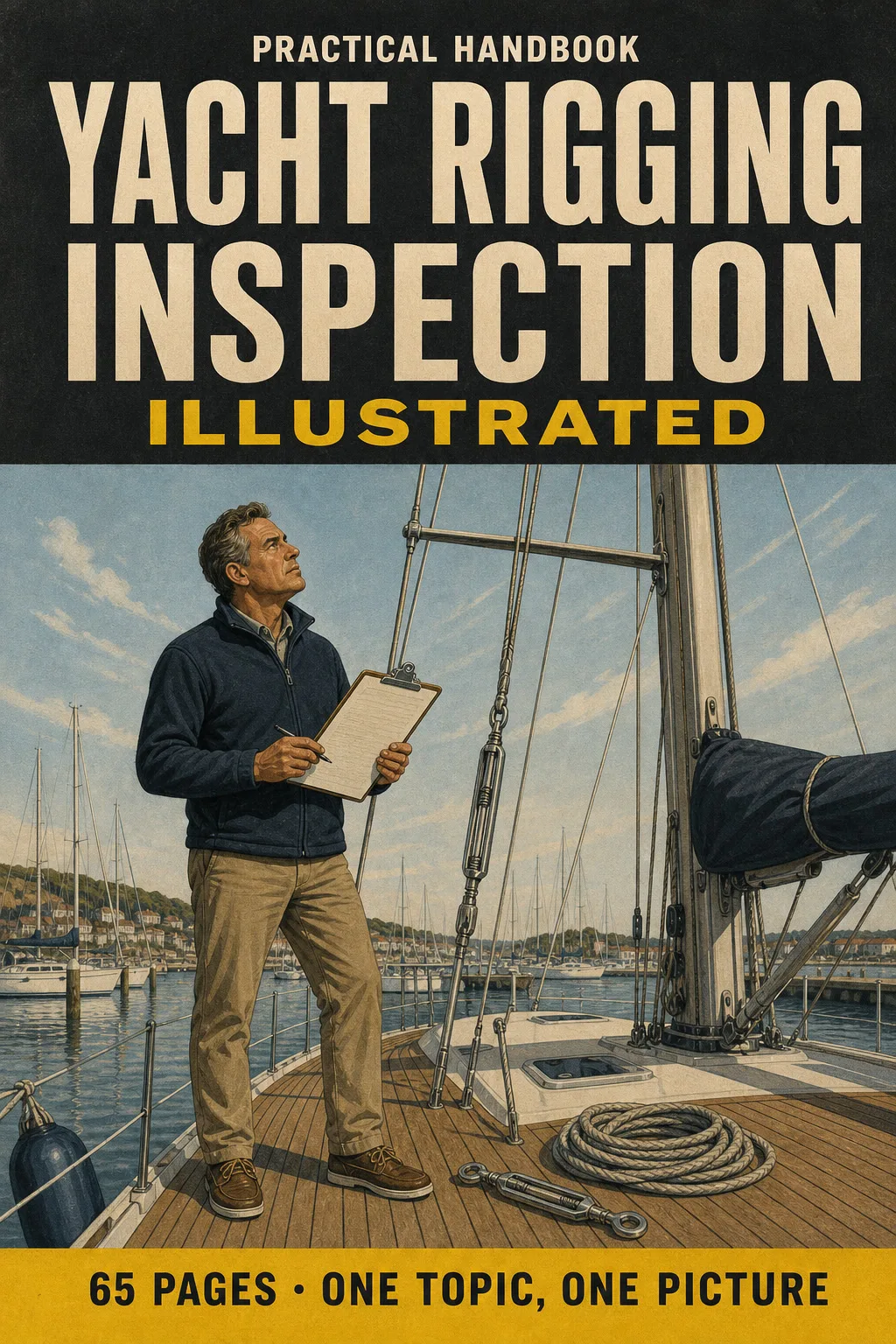
Your Yacht's Mast, Wire and Rigging in Drawings Deck to Masthead, in the Same Order Every Season

Chainplates, turnbuckles, split pins, swage terminals, spreaders, the masthead, rig tuning, halyards and shackles. Every topic has its own page: the drawing first, then what you need to remember. 65 illustrated pages.

YES, I WANT MY RIG CHECKS DRAWN, IN ORDER

🔒 Secure checkout · PDF by email · 30-day guarantee

Every topic, its own pageEach check drawn right and wrong, with the explanation beside it
65 illustrated pages9 parts, from knowing your rig to the season routine
Up-to-date sourcesMast, wire and terminal makers' manuals, plus RYA and MCA guidance
PDF by emailFormat

Look Inside the Book

Every page has one large drawing and a box with the checks, figures and warning signs you need to know:

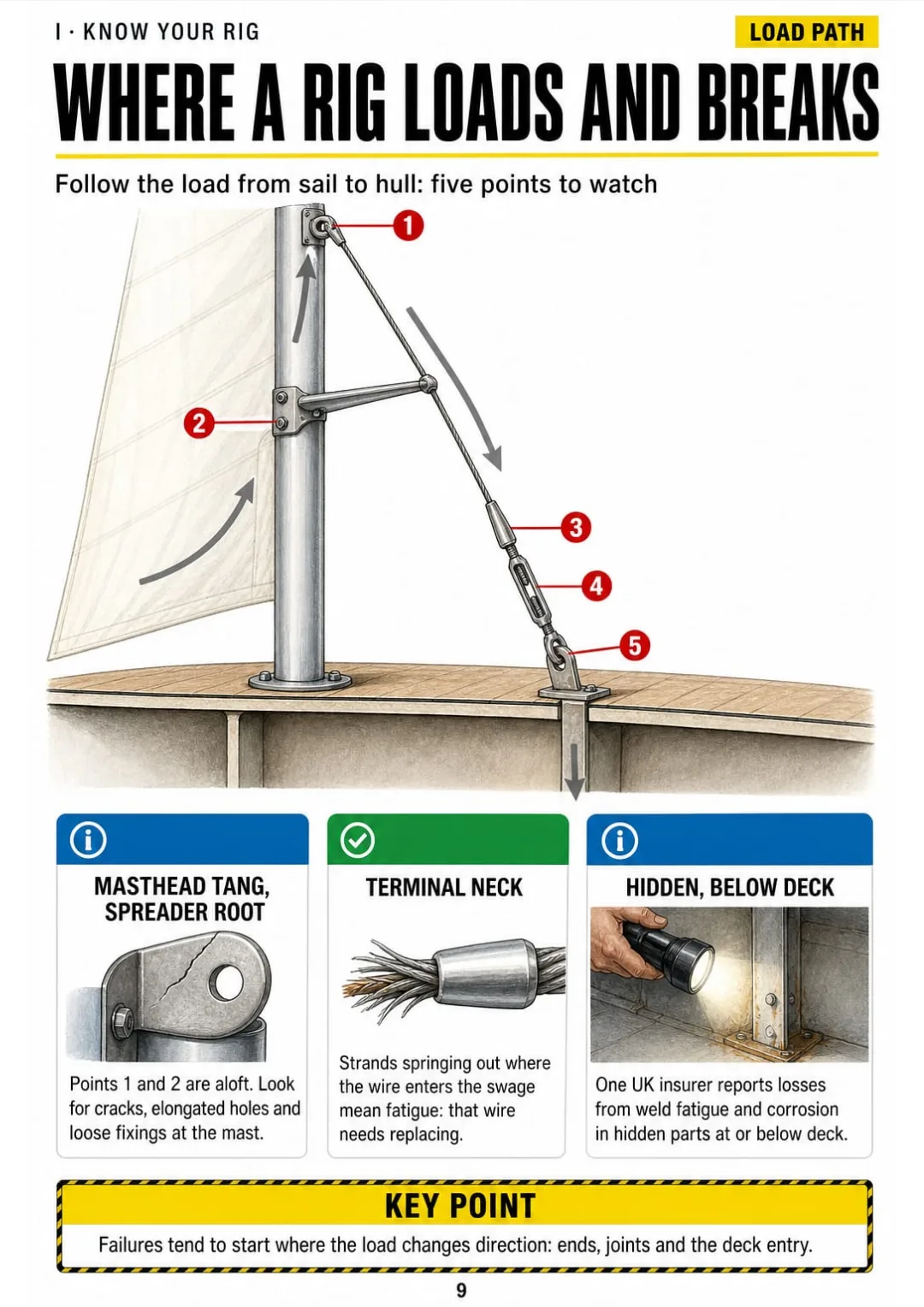
Load path from sail to hull with five circled failure points, masthead tang to chainplate
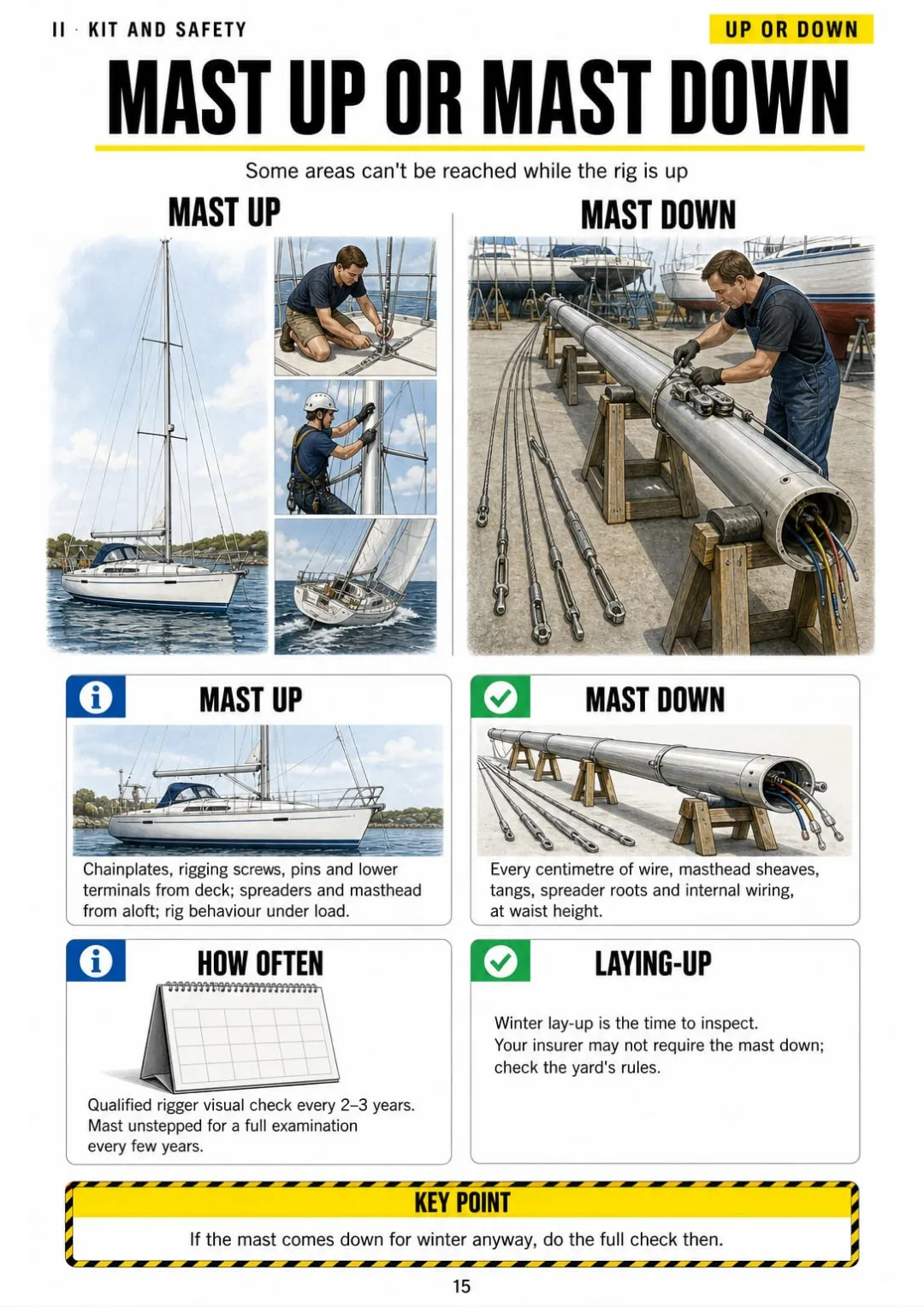
What you see with the mast stepped vs unstepped, and why a full check needs it down
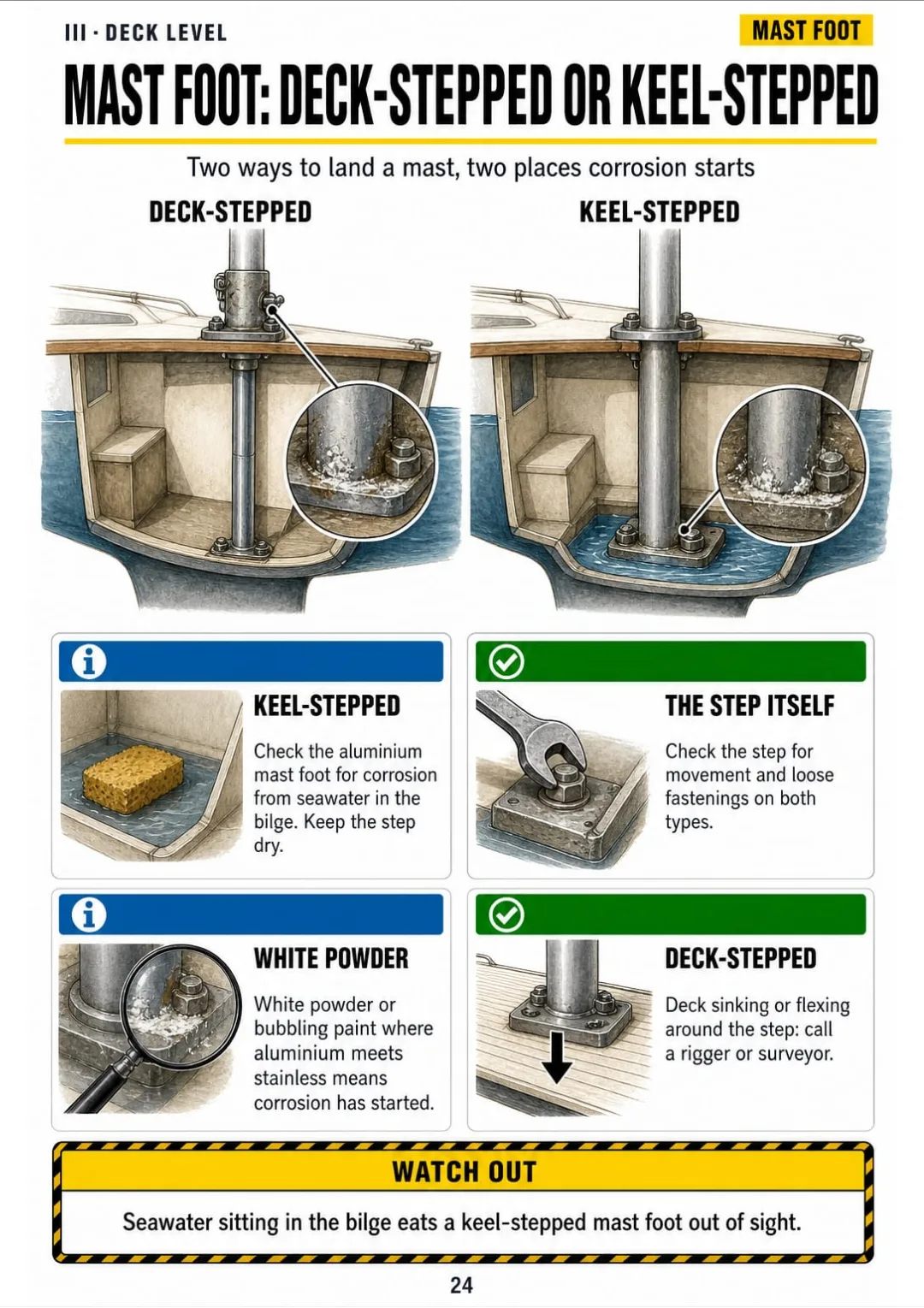
Tabernacle and compression post versus mast step in the bilge: what to check
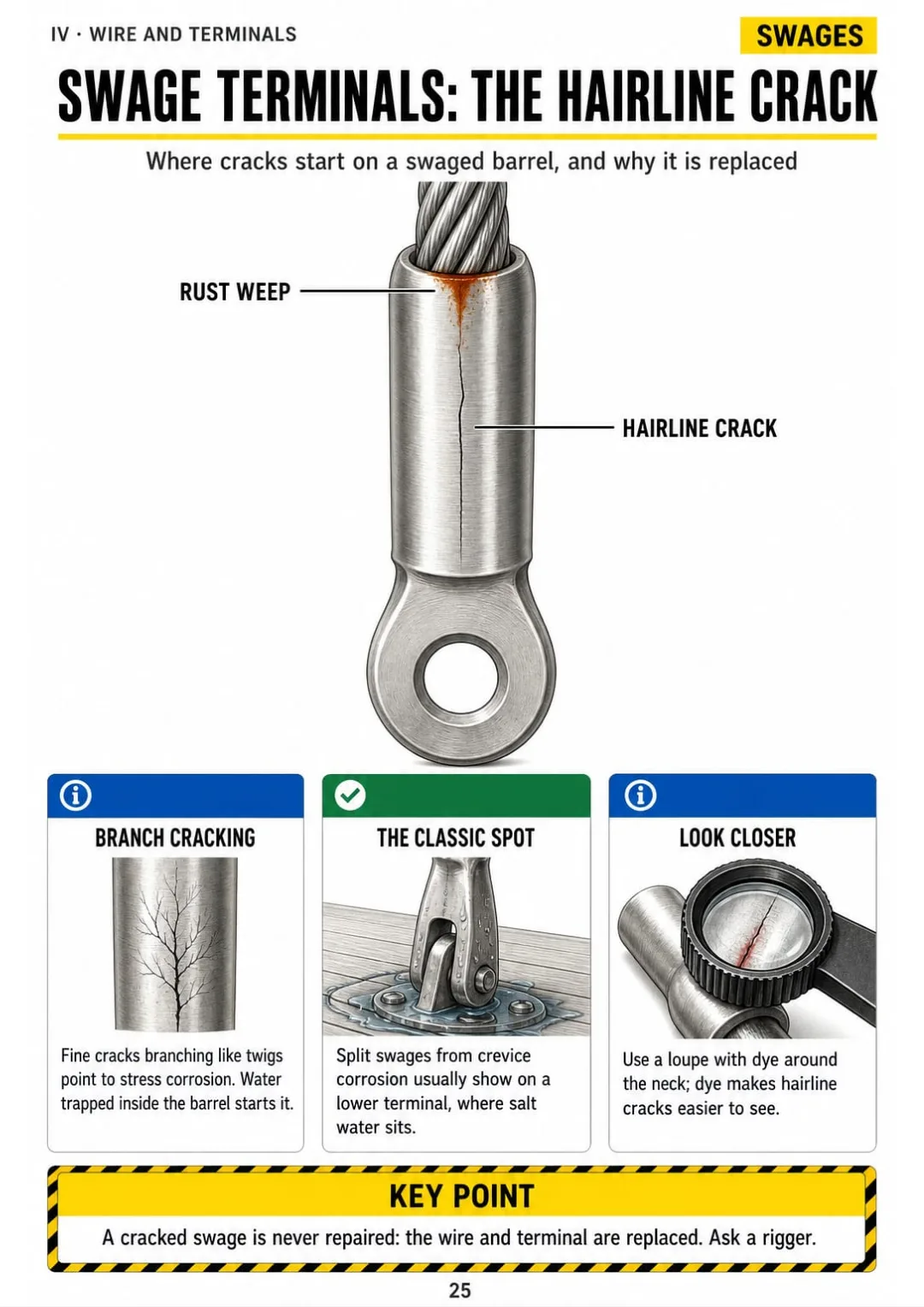
Branch cracking on a swage points to stress corrosion: replace, don't repair.
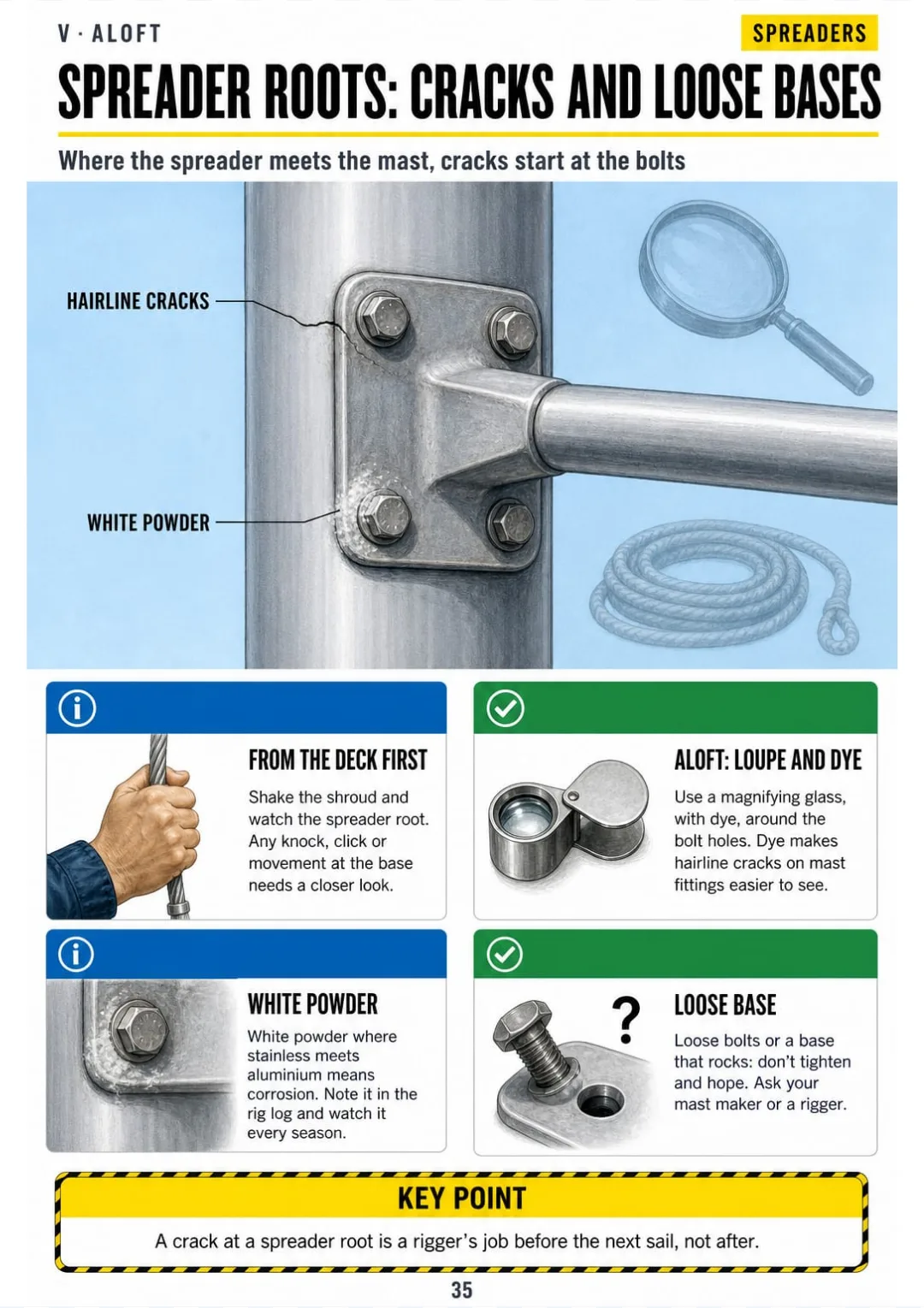
Spreader root drawn: hairline crack at the bolt hole, white powder, loose base
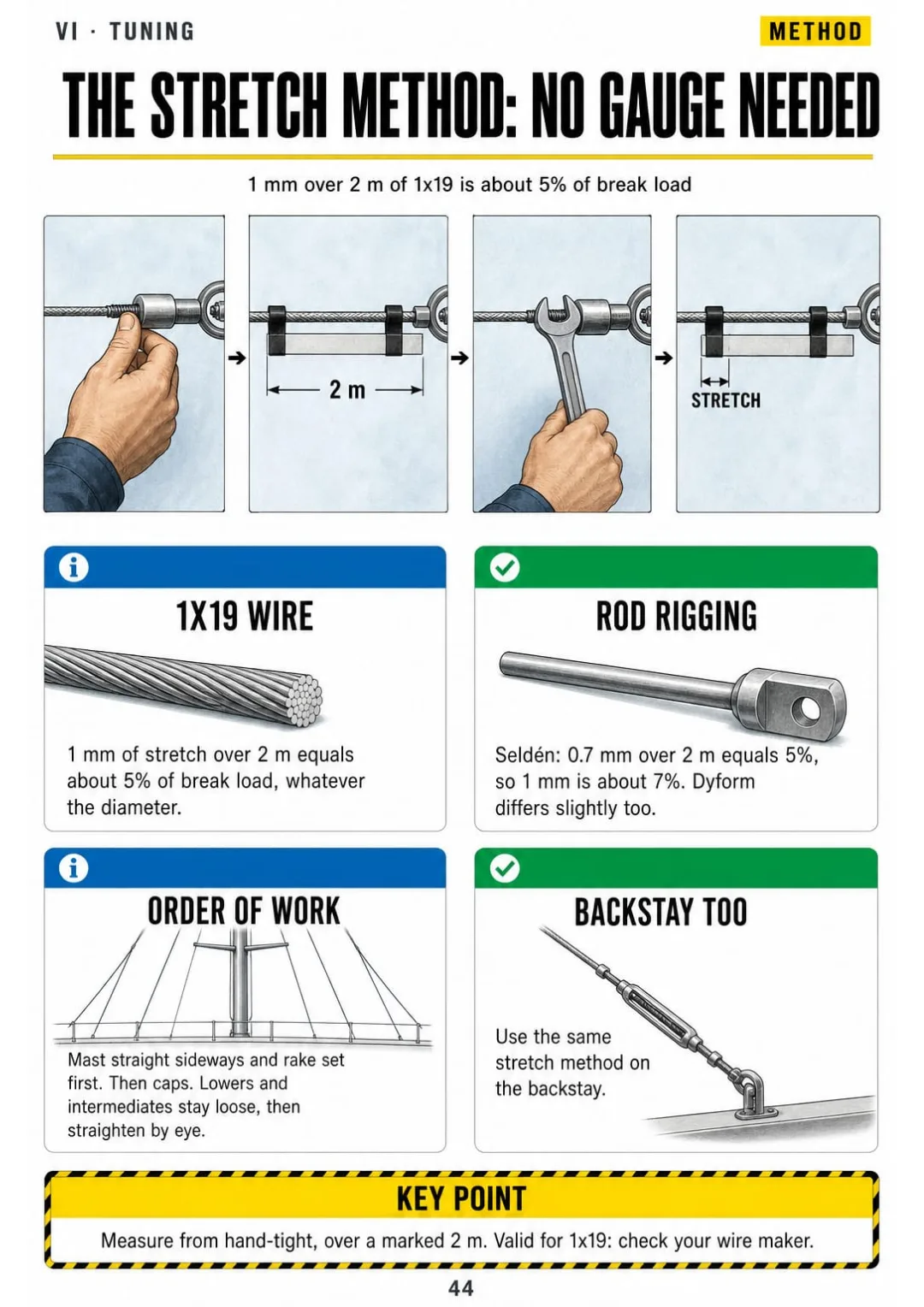
1x19 wire: 1 mm stretch over 2 m ≈ 5% of break load. Rod: 0.7 mm ≈ 5%.
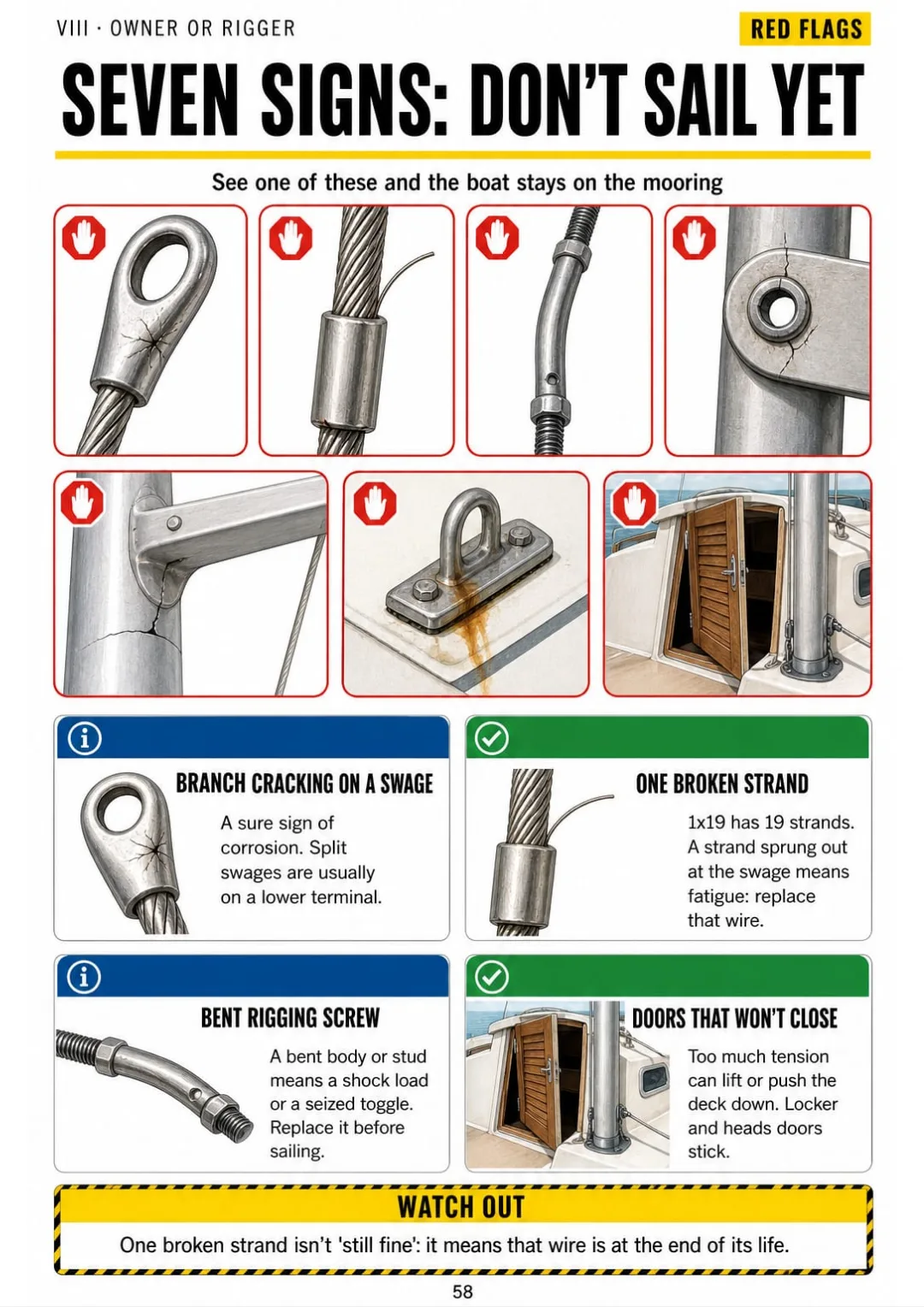
Cracked swage, broken strand, bent screw, cracked tang or root, moving chainplate, deck pushed down: call a rigger.
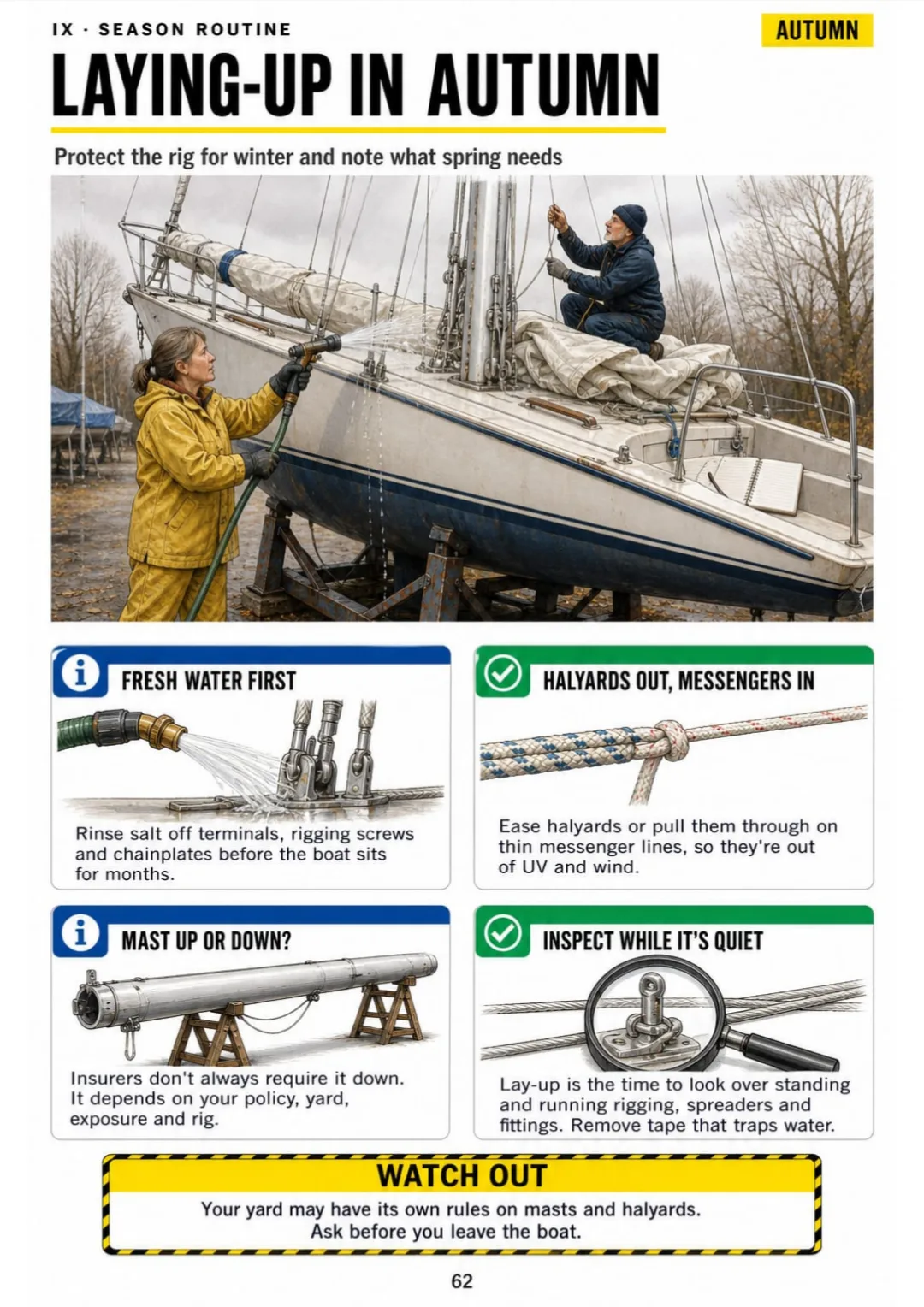
Autumn lay-up: rinse, messengers in, sails off, and write down what spring needs

Swipe to see more →

These are real pages from the book. The table of contents is the full one: 9 parts and 61 topics.

The Problem Isn't You. It's How It Was Explained.

You're kneeling by the shrouds on an April Saturday, spanner in hand, with the tension just set. Now the turnbuckle needs locking, and you're not sure how. Locknut? Split pin? Wire?

The maker's manual gives it three paragraphs and a footnote. One forum post says a locknut is fine, the next says never. Nobody shows you what a properly locked turnbuckle looks like.

Tabernacle and compression post versus mast step in the bilge: what to check

In this book it's one page. The locknut, the split pin and the seizing wire are drawn side by side, with the lock that holds and the one that doesn't clearly marked.

The same goes for swage terminals, clevis pins, toggles, spreader tips and the masthead: each one has its own page.

You look, you see it, you lock it. Then you slip the mooring without going back to the manual.

COMPARE FOR YOURSELF

The Same Topic, Two Ways to Learn It

THIS
  • The manual: line after line
  • Inspection routines explained only in words
  • You go up the mast still unsure
A systematic inspection of the standing rigging should commence at deck level, beginning with the chainplates and their attachment to the hull structure, followed by the rigging screws, toggles, clevis pins and associated locking arrangements, before proceeding to the lower terminals and the mast step. Thereafter the spreaders, tangs and upper terminals should be examined aloft, concluding with the masthead fittings and sheaves, whereupon attention may be turned to the running rigging, which should itself be assessed in accordance with the manufacturer's recommendations.
FOR THIS
  • The inspection order in one drawing
  • The steps numbered in a box
  • You see it and you get it
What you see with the mast stepped vs unstepped, and why a full check needs it down
CONTENTS

Take a Look at the 9 Parts and 61 Topics

Knowing your rig, your kit and safe working, deck level, wire and terminals, aloft, tuning, running rigging, owner or rigger, and the season routine: 65 pages, all illustrated

IKnow your rig before you inspect it · pp. 5-10
  1. Standing vs running rigging: what holds the mast up and what moves the sails
  2. Masthead or fractional: why the check order changes
  3. Sloop, cutter, ketch and furling mast: what changes on each
  4. 1x19 wire, Dyform and rod: three ways to hold a mast
  5. The loads in a rig: where they flow and where they break
  6. How old is your rig? Finding the date on a second-hand boat
IIYour inspection kit and safe working · pp. 11-16
  1. The rigging inspection bag: what goes in
  2. The tights test and the loupe: finding broken strands and cracks
  3. Dye penetrant on swages: when the eye isn't enough
  4. Going aloft safely: the two-halyard rule
  5. Mast up or mast down: what you can check from each
  6. The inspection order: deck up, then chainplate to masthead
IIIAt deck level: chainplates, turnbuckles and pins · pp. 17-24
  1. Chainplates on deck: the rust weep that hides a problem
  2. Chainplates below deck: what to look for in the saloon
  3. Turnbuckles: thread engagement drawn
  4. Toggles: why the turnbuckle must be free to swing
  5. Clevis pins: the right size in the right hole
  6. Split pins and ring dings: opened the right way
  7. Locking turnbuckles: locknuts, pins and wire
  8. Mast foot and mast step: deck-stepped and keel-stepped
IVThe wire and its terminals · pp. 25-34
  1. Swage terminals: the hairline crack
  2. A bent swage: banana shape and the straightedge test
  3. Broken strands: one is enough
  4. Rust staining on stainless wire: surface or serious?
  5. Mechanical terminals: wedge and cone fittings
  6. T-terminals and stemball fittings at the mast
  7. Rod rigging: heads, bends and cold-heads
  8. Forestay and furler foil: what's hiding inside
  9. Backstay, adjusters and insulators
  10. Measuring wire for replacement
VAloft: spreaders, tangs and masthead · pp. 35-41
  1. Spreader roots: cracks and loose bases
  2. Spreader angle: bisecting the shroud
  3. Spreader tips: wire clamped, booted, sail protected
  4. Tangs and lower shroud attachments
  5. The masthead: sheaves, crane and fittings
  6. The mast tube: corrosion, cracks and fittings
  7. Mast wiring and lights: what can chafe inside
VITuning and setting up the rig · pp. 42-47
  1. Mast rake and centring: the halyard test
  2. Shroud tension: why there is a number
  3. The stretch method: tension without a gauge
  4. Mast bend and pre-bend: reading the sightline
  5. Checking the rig under sail
  6. After a knock, a grounding or a hard blow
VIIRunning rigging, sails and deck gear · pp. 48-56
  1. Rope construction: polyester, Dyneema core and covers
  2. Halyards: chafe at the sheave and the exit
  3. Sheets and control lines: UV, glazing and stiffness
  4. Shackles: the right pin and the right mousing
  5. Blocks and sheaves: the turn test
  6. Boom, gooseneck and kicker
  7. Reefing lines and lazy jacks
  8. The furler: drum, line and swivel
  9. Lifelines, pulpits and jackstays
VIIIOwner or rigger: the line on every job · pp. 57-60
  1. What the owner can do, what the rigger does
  2. When to call a rigger now: the red flags
  3. Replacing standing rigging: what age, what to ask
  4. Briefing a rigger or surveyor
IXThe season routine and common mistakes · pp. 61-65
  1. Fitting-out in spring: the checklist
  2. Laying-up in autumn: protect the rig for winter
  3. Mid-season quick check: ten minutes at the mooring
  4. Keeping a rig log year after year
  5. The most frequent rigging mistakes

One Page, One Topic, All Clear

Think of it this way:

It's March, the boat is on the hard and you're about to go up to the spreaders. You need to know what you're looking for before you leave the deck.

You open the page on the inspection order and there it is, drawn: chainplates, screws, lower terminals, mast foot, then spreaders, upper terminals, masthead and ropes. One route, the same every season.

Spreader root drawn: hairline crack at the bolt hole, white powder, loose base

The same with swage terminals, split pins, the stretch method, the masthead and the seven don't-sail-yet signs: each one on its own page.

Yacht Rigging Inspection Illustrated is 9 parts and 61 topics, all drawn, with the season checklists, the rig log and the most frequent mistakes at the end.

What you see drawn, you don't have to memorize.

What's Inside Yacht Rigging Inspection Illustrated:

Ipp. 5-10

Know your rig before you inspect it

Standing and running rigging, masthead or fractional, sloop, cutter, ketch and furling mast, wire, Dyform and rod, load paths and how to date a second-hand rig.

IIpp. 11-16

Your inspection kit and safe working

The inspection bag, the tights test and the loupe, dye penetrant, going aloft with two halyards, mast up or down, and the inspection order.

IIIpp. 17-24

At deck level: chainplates, turnbuckles and pins

Chainplates on deck and below, turnbuckle thread engagement, toggles, clevis pins, split pins and ring dings, locking turnbuckles and the mast step.

IVpp. 25-34

The wire and its terminals

Swage cracks, bent swages, broken strands, rust staining, mechanical, T and stemball terminals, rod heads, the forestay and furler foil, the backstay and measuring wire.

Vpp. 35-41

Aloft: spreaders, tangs and masthead

Spreader roots, angle and tips, tangs, the masthead sheaves and crane, the mast tube, and wiring and lights inside the mast.

VIpp. 42-47

Tuning and setting up the rig

Mast rake and centring, why shroud tension has a number, the stretch method, mast bend, checks under sail and what to do after a knock or a hard blow.

VIIpp. 48-56

Running rigging, sails and deck gear

Rope construction, halyard chafe, sheets and control lines, shackles and moussing, blocks, boom and kicker, reefing lines, the furler and lifelines.

VIIIpp. 57-60

Owner or rigger: the line on every job

What the owner does and what the rigger does, the red flags, when to replace standing rigging and how to brief a rigger or surveyor.

IXpp. 61-65

The season routine and common mistakes

The spring fitting-out checklist, laying-up for winter, the ten-minute mid-season check, keeping a rig log and the most frequent mistakes.

At the end of the book: Fitting-out, laying-up and mid-season checklists, a rig log page and the most frequent rigging mistakes.
Plus: 2 Free Books

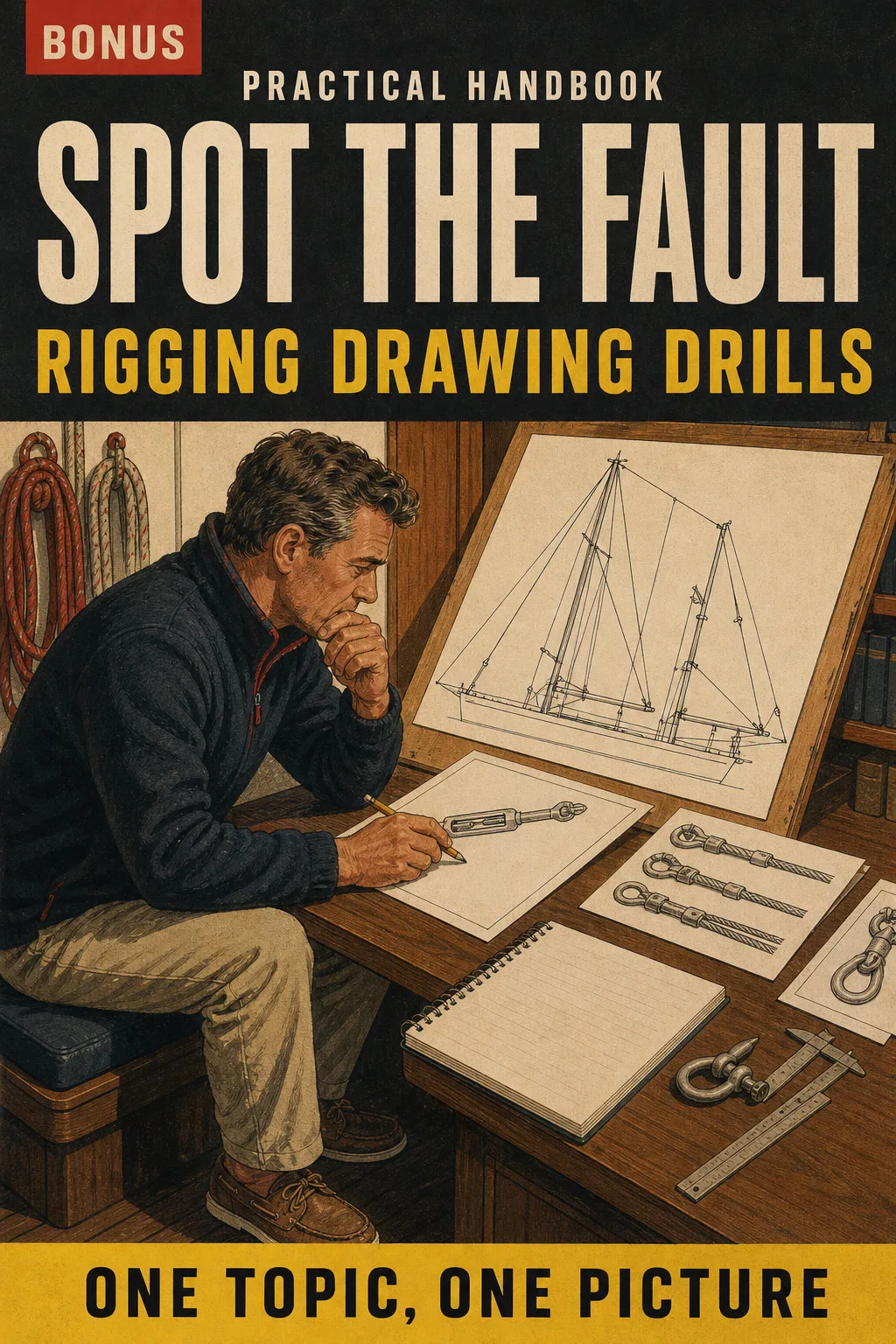
Spot the Fault: Rigging Drawing Drills

BONUS 1: «Spot the Fault: Rigging Drawing Drills»

Value on its own: US$ 17.90

Practise on drawn terminals, pins, wire and fittings with one fault hidden in each, answers at the back, so you recognise the real thing on your own boat.

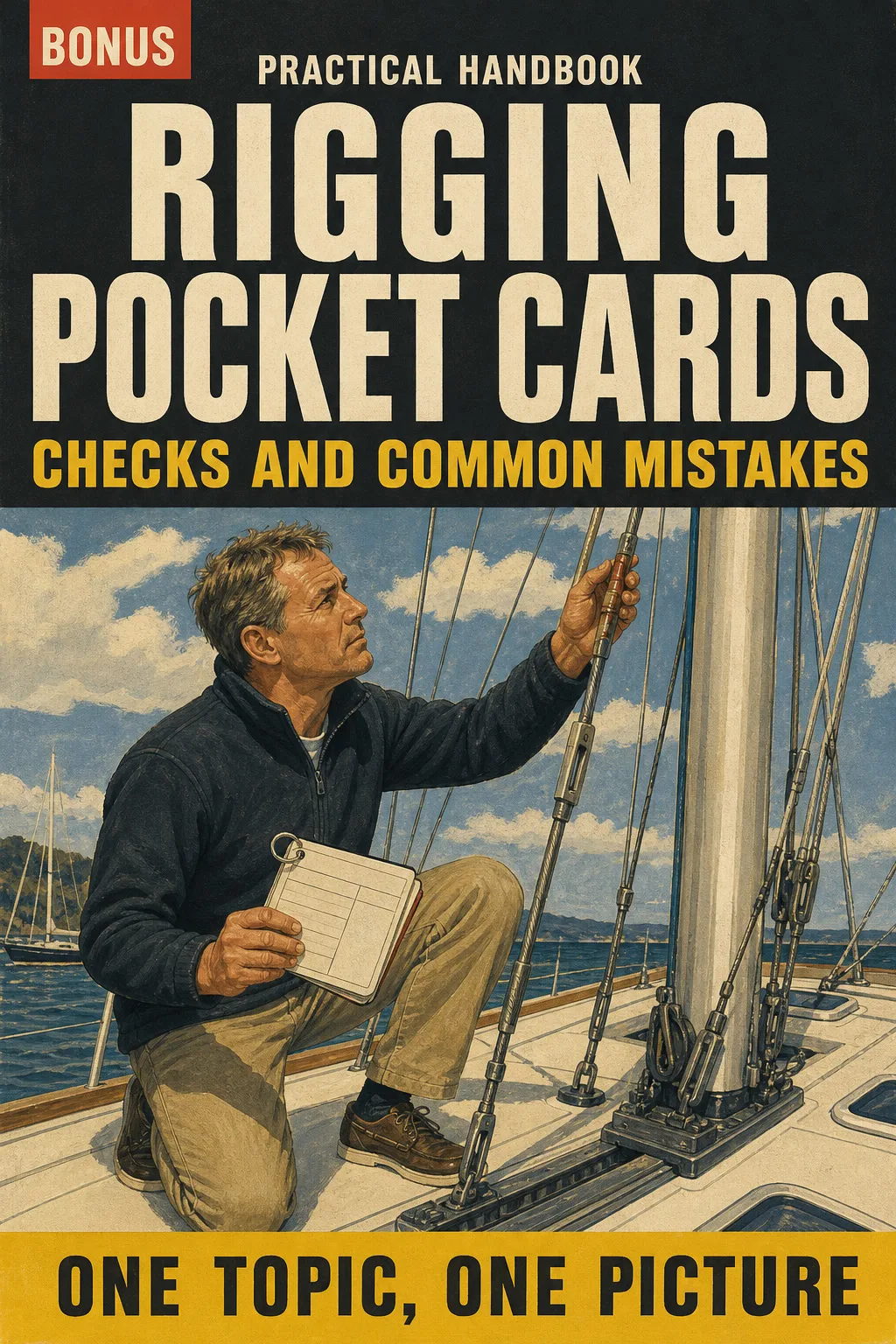
Rigging Pocket Cards: Checks and Common Mistakes

BONUS 2: «Rigging Pocket Cards: Checks and Common Mistakes»

Value on its own: US$ 14.90

The key checks and the most frequent mistakes on printable cards to keep in the boat bag and go through on deck.

Yacht Rigging Inspection Illustrated with 2 Free Books

  • Yacht Rigging Inspection Illustrated: 65 illustrated pagesUS$ 63
  • BONUS 1: Spot the Fault: Rigging Drawing DrillsUS$ 17.90
  • BONUS 2: Rigging Pocket Cards: Checks and Common MistakesUS$ 14.90
  • High-resolution PDF to printIncluded
Total value US$ 95.80
YOUR PRICE:
US$ 27
You save US$ 68.80
YES, I WANT YACHT RIGGING INSPECTION ILLUSTRATED FOR US$ 27

📄 This is a digital PDF book sent to your email: nothing is printed or shipped.

Secure purchaseEncrypted payment30-day guarantee

PDF by email: We email you Yacht Rigging Inspection Illustrated as a PDF, together with the two free books. It's a single payment: no installments, no extra charges.

Who This Book Is For

You've just bought a second-hand yacht

You've just bought a second-hand yacht

You don't know the rig's history. The book shows you how to find its age and walks you through every fitting, chainplate to masthead.

Fitting-out is coming

Fitting-out is coming

You go through the rig in the same order with the spring checklist, ticked and dated, and you know what needs a rigger before launch.

You've done your own maintenance for years

You've done your own maintenance for years

You keep the checks you trust and add a clear order, a drawn reference for every fitting and a rig log year after year.

Everything You Get Today

US$ 95.80US$ 27
YES, I WANT YACHT RIGGING INSPECTION ILLUSTRATED FOR US$ 27

📄 This is a digital PDF book sent to your email: nothing is printed or shipped.

30DAYS
GUARANTEE

30-Day Guarantee

Try Yacht Rigging Inspection Illustrated for 30 days, bonus books included.

We refund everything if the file won't open, if the book isn't what you see here, if you were charged twice or if the email doesn't arrive. Just email us.

You pay once. No subscriptions.

Frequently Asked Questions

Is it for me if I've been sailing for years and do my own fitting-out?

Yes. It isn't a beginner's sailing book: it's a drawn inspection routine for your rig. It covers 1x19 wire, Dyform and rod, furling masts, sloops, cutters and ketches, and tells you what changes on each.

Where does the content come from?

From current guidance by mast, wire and terminal makers, plus the safety guidance UK yachtsmen use (RYA, Maritime and Coastguard Agency). Every figure is marked for you to check against your own rig's maker.

Is it official material?

No. It's an independent illustrated guide. It isn't issued or endorsed by any organisation or manufacturer.

Does it replace a professional rigger or a rig survey?

No. It covers the owner's inspection and basic maintenance, and every page shows where your job ends and the rigger's begins. Replacing standing rigging is a rigger's job.

Will it tell me when my standing rigging is due for replacement?

It shows you how to date a second-hand rig, the signs that mean replace now, and how to brief a rigger. Age limits set by your insurer are in your policy: check them there and log them in the rig log.

When and how does it arrive?

As a PDF by email, to the address you enter at checkout.

Do I have to pay every month?

No. It's a one-off payment. There's no subscription.

Can I have it on paper?

Yes. The PDF is printable, so you can print it, or just the pages you need, and keep them in the boat bag.

How does the refund work?

You have 30 days. We refund everything if the file won't open, if the book isn't what you see on this page, if you were charged twice or if the email doesn't arrive: just email us.

Before You Close This Page

No more rereading the manual with nothing sticking.

A properly locked turnbuckle: you see it drawn, and that's it.

You start fitting-out knowing where every check is.

Drawings make studying faster.

The book is right below.

One-time payment: US$ 27 · Guarantee: 30 days · PDF by email

YES, I WANT YACHT RIGGING INSPECTION ILLUSTRATED FOR US$ 27

📄 This is a digital PDF book sent to your email: nothing is printed or shipped.